Fraud Detection
The PwC global economic crime survey of 2016 suggests that approximately 36% of organizations experienced economic crime. Therefore, there is definitely a need to solve the problem of credit card fraud detection. The task of fraud detection often boils down to outlier detection, in which a dataset is scanned through to find potential anomalies in the data. In the past, this was done by employees which checked all transactions manually. With the rise of machine learning, artificial intelligence, deep learning and other relevant fields of information technology, it becomes feasible to automate this process and to save some of the intensive amount of labor that is put into detecting credit card fraud.
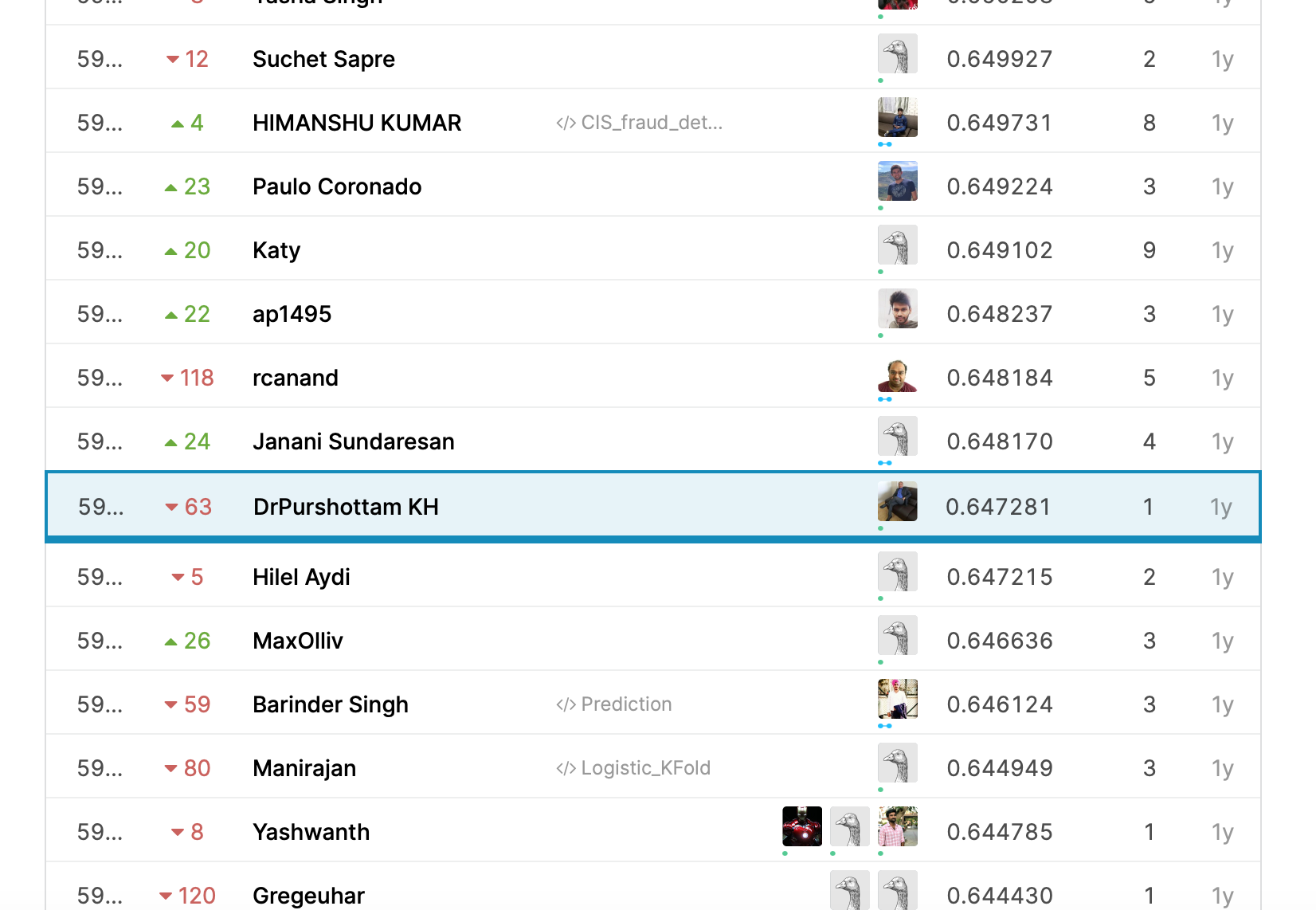
In this competition, you’ll benchmark machine learning models on a challenging large-scale dataset. The data comes from Vesta’s real-world e-commerce transactions and contains a wide range of features from device type to product features. You also have the opportunity to create new features to improve your results.
In this project, I trained a model with pandas, seaborn and scikit-learn to create a fraud detection classifier.